
The United Kingdom’s Chancellor Rachel Reeves has issued a serious warning regarding the consequences of Donald Trump’s trade policies, indicating a potential major impact on the British economy. As global economic uncertainties mount, the UK government is seeking diplomatic channels to reduce existing US tariffs, aiming to stabilize trade relations while defending domestic interests.
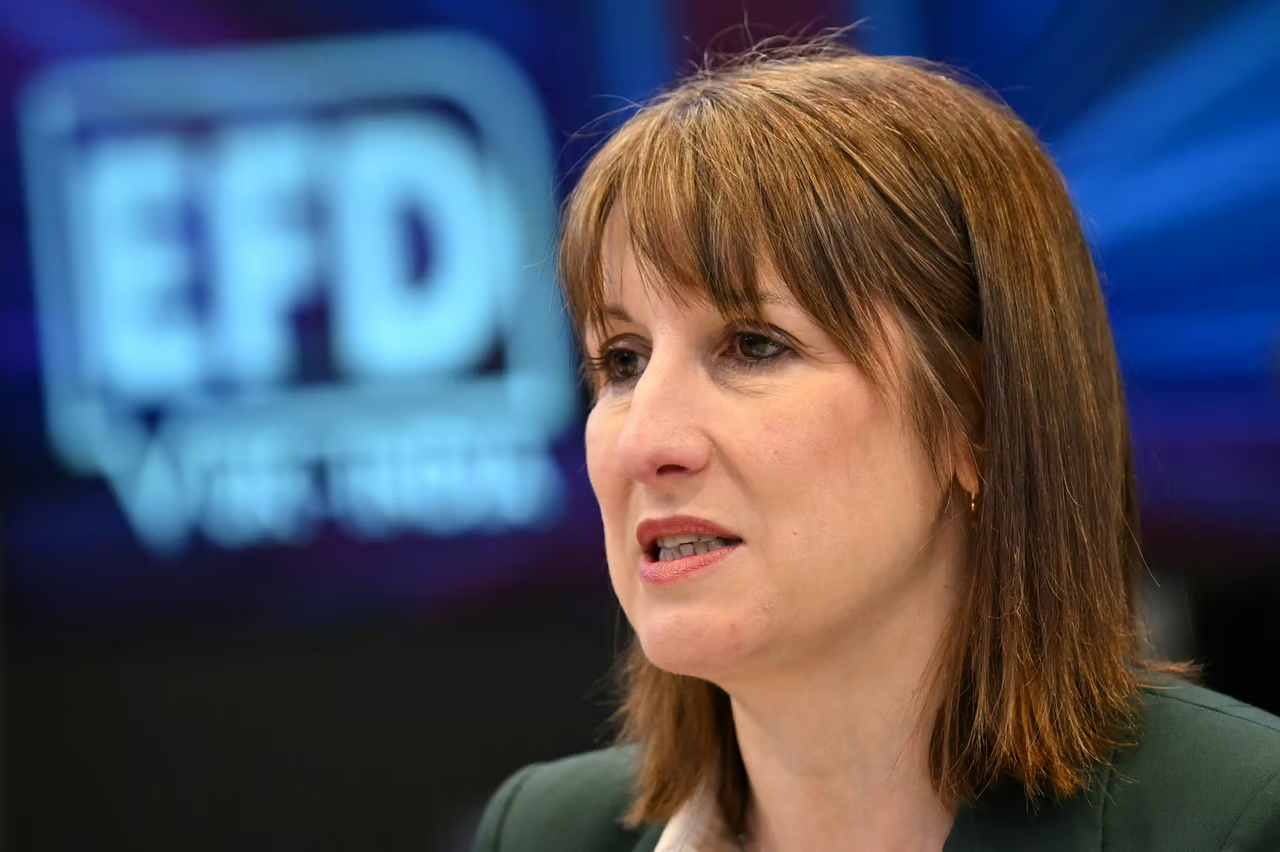
Trump’s Tariffs: A Threat to the UK Economy
UK Chancellor Rachel Reeves has raised alarms over the growing effects of Donald Trump’s trade war, stating it could have a “profound impact” on the British economy. The warning comes as she visits Washington, DC, to meet finance ministers at the spring sessions of the International Monetary Fund (IMF) and the World Bank.
Economic Forecast Downgrade Adds Pressure
Earlier this week, the IMF cut its UK growth forecast for 2025 by 0.5 percent. Despite this revision, the UK economy is still projected to grow faster than Japan, France, Italy, Germany, and the broader Eurozone. However, the UK lags behind the US and Canada, increasing the urgency for new international trade agreements.
Pushing for Open Trade
Reeves is expected to advocate for reduced trade barriers during meetings with G7 and G20 finance ministers. Emphasizing the need for “stability and fairness,” she argued for open trade policies that would benefit both businesses and workers. The chancellor remains committed to economic diplomacy that supports long-term growth and investment.
High-Level Talks with the US Treasury
The Chancellor’s first face-to-face meeting with US Treasury Secretary Scott Bessent will focus on resolving tariffs imposed under the Trump administration. These include 25 percent duties on cars, steel, aluminum, and upcoming restrictions on pharmaceutical products. Reeves will argue for the UK’s removal from these measures, which have hindered trade between the two nations.
Concessions and Conditions on the Table
British officials are reportedly considering changes to the digital services tax and online regulation policies as part of negotiations. Additional concessions may include reduced tariffs on certain US agricultural products, although UK food safety standards are expected to remain firm and non-negotiable.
Defending the National Interest
Prime Minister Keir Starmer and Chancellor Reeves have both stated that protecting the UK’s national interest is central to any trade deal with the US. Reeves reinforced this position before the talks, making it clear that any agreement must serve British businesses and citizens. However, immediate breakthroughs are not expected this week.
No Quick Fix Expected
Despite efforts to re-establish strong trade ties with the United States, UK officials do not anticipate a finalized agreement during this round of discussions. Reeves emphasized that the UK will persist in defending its economic interests and continue negotiating from a position of strength and clarity.


COMMENTS