
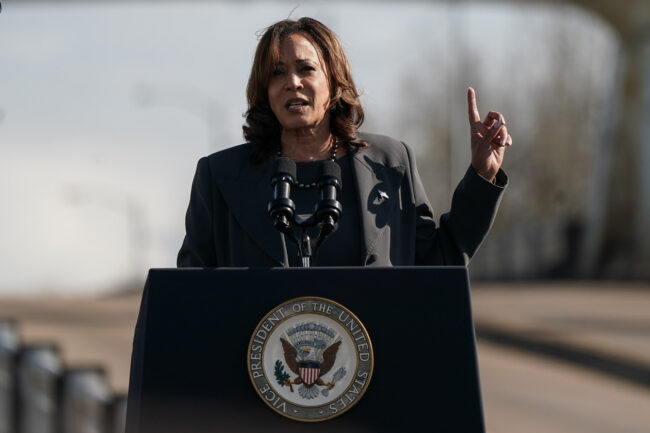
Vice President Kamala Harris’s recent remarks on Israel’s military actions have sparked internal debate within the Biden administration, signaling a potential shift in U.S. policy towards the Israeli-Palestinian conflict.
Harris’s Bold Stance
In a television interview, Harris refrained from ruling out “consequences” for Israel if it launched a full-scale invasion of Rafah in its conflict with Hamas, diverging from President Joe Biden’s more restrained approach.
Internal Discord
While some administration officials support Harris’s assertiveness, others view her remarks as creating unnecessary friction with Israel, a longstanding U.S. ally in the Middle East.
Differences in Approach
Harris has consistently taken a more critical stance towards Israel’s military campaign than Biden, reflecting a potential divergence in their diplomatic strategies.
Administration’s Response
Despite apparent discrepancies, the administration maintains that Harris’s remarks align with Biden’s overall approach to the Israeli-Palestinian conflict.
Public Perception
Harris’s willingness to challenge Israeli leadership resonates with certain domestic audiences, particularly among progressives and voters of color, who have grown increasingly critical of U.S. support for Israel.
Impact on U.S.-Israeli Relations
The Biden administration’s growing criticism of Israel’s actions, coupled with Harris’s vocal stance, has raised concerns about the future of U.S.-Israeli relations and the effectiveness of diplomatic efforts in the region.
Potential Shift in Policy
While the administration denies any major policy changes, Harris’s comments signal a potential shift towards a more assertive stance on the Israeli-Palestinian conflict.


COMMENTS