
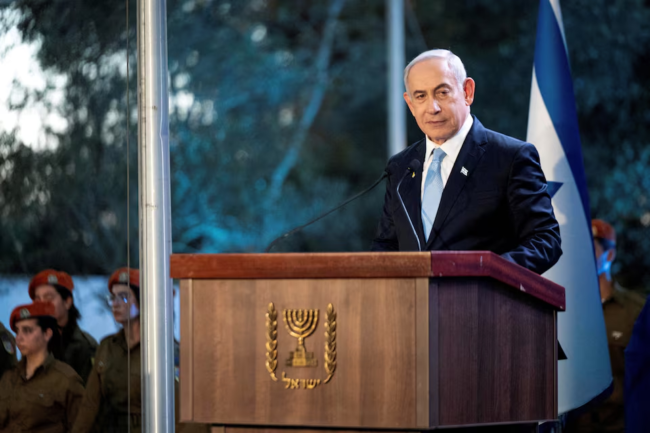
Israeli Prime Minister Benjamin Netanyahu speaks at a state memorial ceremony for Zeev Jabotinsky, founder of the Revisionist Zionist movement, amid the ongoing Israel-Hamas conflict at Mount Herzl military cemetery in Jerusalem, August 4, 2024. Naama Grynbaum/Pool via REUTERS/File Photo
Netanyahu Faces Backlash Over Gaza Ceasefire Talks
Growing Tensions Over Ceasefire Negotiations
Israeli Prime Minister Benjamin Netanyahu is encountering significant criticism both domestically and internationally due to stalled negotiations concerning a Gaza ceasefire. These concerns have been exacerbated by fears of an escalating conflict with Iran, according to three Israeli officials.
Internal Disputes and Public Reactions
Disagreements between Netanyahu and the defense establishment about a potential ceasefire deal have surfaced, manifesting in public statements and private disputes leaked to the Israeli media. Over the past four weeks, three Israeli officials involved in or familiar with the negotiations have expressed worries that political factors are hindering the possibility of reaching an agreement. One official remarked, “The feeling is that the prime minister is avoiding making a decision about the deal and is not pushing for it full force.”
Coalition Instability and Hostage Crisis
Netanyahu’s far-right coalition partners have threatened the government’s stability if the war concludes without defeating Hamas. Netanyahu has emphasized that securing the release of the remaining 115 hostages taken during the Hamas-led assault on October 7 is a top priority. However, the urgency of the situation has intensified as tensions with Iran have escalated, raising concerns about a broader regional conflict.
Casualty and Negotiation Details
The October 7 attack resulted in the deaths of 1,200 people and over 250 hostages being taken, according to Israeli records. Gaza’s Hamas-run health authorities report that over 39,000 Palestinians have been killed since the conflict began. Efforts by the United States, Egypt, and Qatar to broker a deal saw progress in July but have stalled due to new conditions imposed by Israel. The proposed framework includes a six-week ceasefire and the exchange of hostages for Palestinian prisoners, but new Israeli demands, such as screening displaced Palestinians returning to Gaza’s north, have complicated the negotiations.
Complications from Recent Events
The recent killing of Hamas leader Ismail Haniyeh in Tehran has further complicated the situation, though Hamas has not completely closed the door on negotiations. Netanyahu has vowed to continue military pressure on Hamas until all hostages are released and war objectives are achieved. In response to reports of U.S. President Joe Biden expressing frustration with Netanyahu, Israeli officials have stated that leaks from meetings are intended to pressure the prime minister into making unfavorable deals.
Security Chiefs and Political Stalemate
Israeli security chiefs, including Defense Minister Yoav Gallant and Shin Bet head Ronen Bar, have reportedly questioned Netanyahu’s commitment to a hostage deal, suggesting that new terms introduced by Netanyahu have rendered an agreement unattainable. Publicly, Gallant and military chief Herzi Halevi have emphasized the military’s capability to handle any ceasefire challenges and the importance of a deal to free hostages. Netanyahu has consistently cited “red lines” concerning Israel’s security and denied introducing new conditions, attributing the stalemate to Hamas.


COMMENTS