
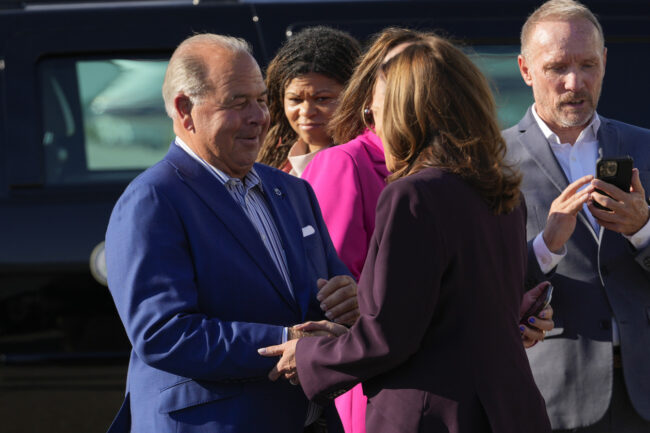
PHILADELPHIA — Kamala Harris holds a narrow lead over Donald Trump in key battleground states like Pennsylvania, Michigan, and Wisconsin, but some Democrats are worried that Trump’s appeal to working-class voters could again shatter the Blue Wall. While Harris has strong support from Democratic Party leaders, union concerns and a growing gender gap among voters may challenge her path to victory in November.
Union Worries Emerge
A significant sign of trouble came this week when the Teamsters withheld an endorsement for Harris. Polling within the union suggested that a notable portion of its members, particularly men, support Trump. This has alarmed many within the Democratic Party, as Trump’s appeal to white, working-class voters played a crucial role in his 2016 and 2020 performances.
Despite Trump’s anti-union record, he continues to command loyalty among sections of the labor force, especially in swing states. Jimmy Williams, president of the International Union of Painters and Allied Trades, who supports Harris, warned that while some union voters are movable, Trump’s hold remains strong.
Teamsters President Sean O’Brien‘s decision not to endorse Harris came as a blow, particularly after President Joe Biden’s administration had worked to protect union pensions through the American Rescue Plan. Some Democratic leaders believe that Harris needs to connect more effectively with older, white, working-class voters, who are feeling the pain of inflation and higher costs of living.
Gender Gap Challenges
Democratic strategists are optimistic about Harris’ appeal to white, non-college-educated women, but her support among white, non-college-educated men is faltering. Pete Giangreco, a longtime Democratic consultant, highlighted that the gender gap in voting preferences is widening. While Harris is performing better than many Democrats with women, male voters, particularly in Rust Belt states, are increasingly moving toward Trump.
This gender divide could prove critical in swing states where union support is often split. Democratic pollsters are also concerned about Republicans’ gains on issues like Social Security and Medicare, typically strong points for Democrats. A recent survey from the Alliance for Retired Americans showed that Republicans are now nearly even with Democrats on those issues, raising red flags for Harris.
Battleground Strategies
To address these concerns, Harris has begun campaigning heavily in rural and exurban areas in battleground states, emphasizing her support for Social Security, Medicare, and efforts to combat price gouging. Her campaign has also launched a series of TV and digital ads targeting Trump’s plans for cuts to those programs.
Some Democrats, however, argue that Harris needs to be more aggressive in attacking Trump’s record on Social Security and Medicare. A Pennsylvania Democratic official stressed the importance of Harris amplifying her message to older voters, who may still be unfamiliar with her.
Looking Ahead
As the election nears, Harris’ campaign has the backing of most major unions and labor leaders, including United Auto Workers President Shawn Fain. Still, Trump’s appeal to working-class men, especially in regions like Michigan’s I-75 corridor, poses a significant challenge.
The outcome may hinge on how well Harris can navigate these challenges and close the gender gap. With just 47 days until the election, Democrats are ramping up efforts to secure votes from union households and address Trump’s messaging on economic issues that resonate with working-class voters.


COMMENTS