
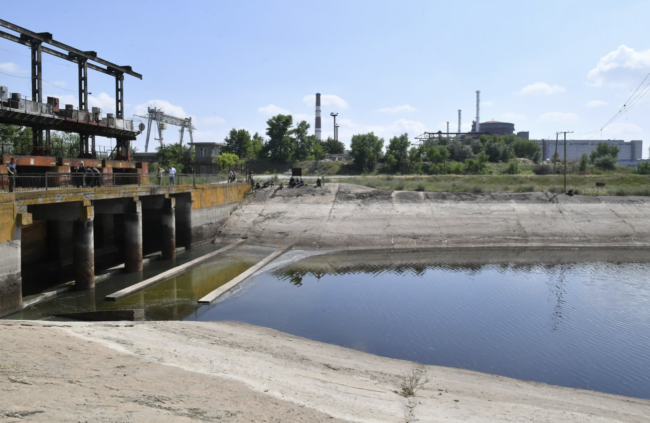
Ukrainian President Volodymyr Zelenskyy has raised alarms about a fire on the grounds of the Zaporizhzhia nuclear power plant, the largest nuclear facility in Europe. The fire, reported on Sunday, underscores the growing dangers in the ongoing conflict between Ukraine and Russia, now entering its third year.
Escalating Tensions Over Zaporizhzhia Nuclear Plant
The Zaporizhzhia plant, located in Ukrainian territory, has been under Russian control since shortly after the full-scale invasion in 2022. Despite its six nuclear reactors being in cold shutdown, the risk of a nuclear meltdown remains a pressing concern. On Sunday, no nuclear activity was recorded, and radiation levels were reported to be within normal ranges. However, Zelenskyy stressed that as long as Russian forces control the facility, the situation remains precarious.
In a post on X (formerly Twitter), Zelenskyy emphasized the continuous threat posed by Russian occupation, stating, “Since the first day of its seizure, Russia has been using the Zaporizhzhia NPP only to blackmail Ukraine, all of Europe, and the world.”
Global Concerns Over Nuclear Safety
The safety of the Zaporizhzhia nuclear plant has been a focal point of international concern since the war began. Rafael Mariano Grossi, Director General of the International Atomic Energy Agency (IAEA), warned in April about the deteriorating nuclear safety conditions at the plant due to the ongoing conflict. The IAEA reiterated these concerns on Sunday, directing attention to “strong dark smoke” rising from the facility and reporting that a drone attack had targeted one of the site’s cooling towers. While no immediate impact on nuclear safety was noted, the incident highlights the fragile security environment surrounding the plant.
A Broader Conflict with Nuclear Risks
The fire at Zaporizhzhia comes amid Ukraine’s counteroffensive, which has seen Ukrainian forces occupying Russian territory for the first time. The ongoing war, the first to be fought so close to major nuclear facilities, has brought the specter of a nuclear disaster to the forefront of global concerns. The world’s worst nuclear accident, the 1986 Chernobyl disaster in Ukraine, serves as a grim reminder of the potential consequences.
In July, the United Nations adopted a resolution demanding that Russia return control of the Zaporizhzhia plant to Ukraine. The IAEA has continued to appeal for restraint from all sides to prevent a nuclear accident with potentially severe radiological consequences.
The Path Forward
As the conflict drags on, the situation at Zaporizhzhia remains a symbol of the war’s broader risks. The potential for a nuclear incident adds a dangerous dimension to the ongoing conflict, raising the stakes for both Ukraine and Russia, as well as the international community.


COMMENTS