
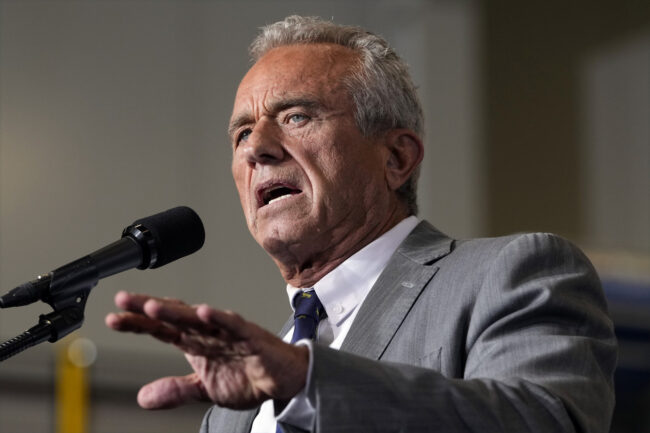
The Supreme Court has declined Robert F. Kennedy Jr.’s request to appear on the 2024 presidential ballot in New York, delivering its decision in a brief one-line order without explanation. The ruling, issued on Friday, came with no recorded dissent from any justice, as is typical in cases on the court’s emergency docket.
Kennedy’s Ballot Battle in New York
Despite suspending his presidential bid last month and endorsing former President Donald Trump, Kennedy’s campaign continued its legal fight to secure a spot on the New York ballot. The campaign collected over 100,000 signatures to qualify for the ballot, but Democratic Party officials challenged his candidacy in court, arguing that Kennedy didn’t actually reside at the Katonah, New York address he listed on his candidacy forms.
Kennedy claimed he had rented a room in Katonah at the home of a childhood friend, but the friend’s wife testified in court that Kennedy had only spent one night there. Kennedy maintained in legal filings that his New York roots were strong, stating, “I am, at the very fiber of my being, a New Yorker.”
Legal Roadblocks and Supreme Court Decision
Kennedy’s efforts were thwarted by New York courts, which ordered him removed from the ballot. His campaign then faced setbacks in federal district court and the 2nd Circuit Court of Appeals before ultimately coming up short at the Supreme Court. The high court’s ruling effectively ended Kennedy’s attempt to appear on the New York ballot.
Following the decision, Kennedy told reporters he had no immediate comment, stating only that his team was “looking at our options.”
A Puzzling Strategy
Kennedy’s pursuit of a New York ballot spot puzzled many, especially after his public endorsement of Trump. His campaign had been working to remove his name from ballots in key battleground states like Arizona, Nevada, Georgia, and North Carolina, where his presence could influence the race between Trump and Democratic candidate Vice President Kamala Harris.
In legal filings, Kennedy’s attorneys criticized New York’s stringent ballot access requirements for third-party candidates, arguing that the voters who signed his petition had a right to see his name on the ballot, regardless of whether Kennedy was still campaigning.
Kennedy, the son of Attorney General Robert F. Kennedy and nephew of President John F. Kennedy, initially entered the 2024 race as a Democratic candidate before switching to an independent run in October.


COMMENTS