
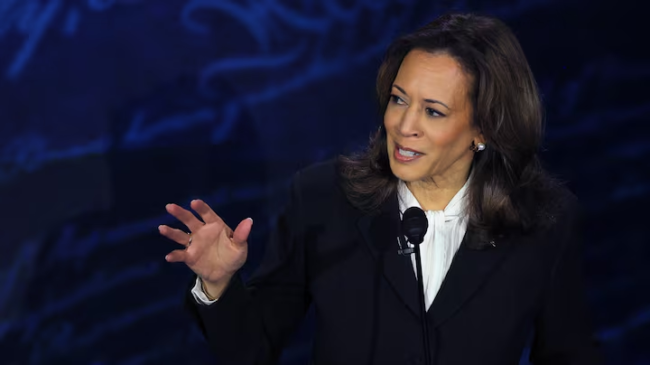
Democratic presidential nominee, U.S. Vice President Kamala Harris speaks during the presidential debate hosted by ABC with Republican presidential nominee, former U.S. President Donald Trump, in Philadelphia, September 10, 2024. REUTERS/Brian Snyder
Kamala Harris Perceived as Dominating Debate, but Many Undecided Voters Remain Unconvinced
Overview of the Debate Reactions
Kamala Harris, the Democratic vice president, was widely seen as having a strong performance in the recent presidential debate against former Republican president Donald Trump. However, feedback from a group of undecided voters revealed that many remained unconvinced that Harris was the better candidate. In interviews conducted by Reuters, six of the ten undecided voters expressed a preference for Trump or indicated that they were leaning toward supporting him after the debate. Three voters leaned toward Harris, while one remained unsure of their decision.
Swing Voters and the Election’s Importance
Harris and Trump are currently in a closely contested race, and the outcome of the November 5 election is expected to be determined by a relatively small margin of votes in several key battleground states. These swing states are home to undecided voters who could be pivotal in determining the final outcome. The sample size of the undecided voters interviewed was small, yet the responses provided insights into Harris’s performance, particularly the need for more detailed policy proposals to attract undecided voters.
Voter Concerns on Economic Policy
A key issue raised by five of the ten undecided voters was Harris’s perceived lack of clarity on economic policies, especially regarding how she plans to address the high cost of living—a critical concern for many voters. Despite the debate lasting more than 90 minutes, several participants expressed disappointment that Harris did not provide sufficient details on how she intends to improve the U.S. economy.
According to Mark Kadish, a 61-year-old entrepreneur from Florida, “There was no real meat and bones for her plans.” Kadish and other respondents emphasized that clearer economic strategies are necessary to earn their support.
Comparisons with Trump’s Economic Record
Among those who leaned toward Trump, the decision appeared to be influenced by their trust in his economic policies, despite expressing personal dislike for him. These voters indicated that their financial situations had been better under Trump’s presidency from 2017 to 2021. Some cited his proposals to tax foreign imports as a positive measure, even though economists have warned that such policies could lead to higher prices.
Four of the six voters leaning toward Trump mentioned that Harris failed to differentiate her economic policies from those of President Joe Biden, whom they blamed for the high cost of living. As a result, some voters remained unclear on Harris’s specific plans to address their economic concerns.
Harris’s Focus on Criticism of Trump
Throughout the debate, Harris did provide some policy specifics, including her plans to offer tax benefits to families and small businesses. However, several respondents criticized her for focusing more on attacking Trump than on articulating her own policy proposals. Robert Wheeler, a 48-year-old security firm executive from Nevada, who had been leaning toward Harris before the debate, shifted his support toward Trump. Wheeler remarked, “I felt like the whole debate was Kamala Harris telling me why not to vote for Donald Trump instead of why she’s the right candidate.”
Positive Feedback for Harris
Despite the criticisms, some undecided voters responded positively to Harris’s performance. Meredith Marshall, a self-employed individual from Los Angeles, indicated that she was now supporting Harris. Although she expressed a desire for more information about the economy, she appreciated Harris’s plan to assist small business owners, which resonated with her personal priorities.


COMMENTS