
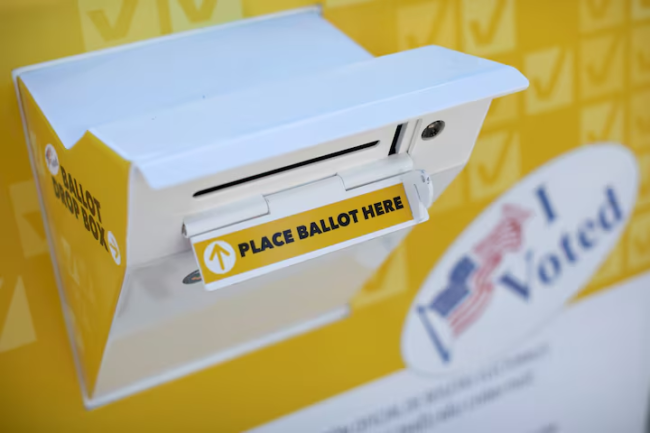
An official Orange County election ballot drop box is shown in Irvine, California, U.S., October 14, 2020. REUTERS/Mike Blake/File Photo
U.S. Faces Growing Election Interference Threat from Russia, Iran, and China, DHS Reports
The U.S. Department of Homeland Security (DHS) released its annual threat assessment on Wednesday, warning of an increasing threat posed by Russia, Iran, and China to influence the upcoming November 5 presidential election. These foreign actors are allegedly using a combination of cyber tactics, including artificial intelligence (AI), to spread disinformation and sow discord among American voters.
Influence Campaigns Using AI and Disinformation
The report highlights how Russia’s “influence actors” have amplified divisive narratives about sensitive issues, such as immigration, in an effort to fuel social unrest in the U.S. Additionally, these actors have leveraged generative AI to create fake websites designed to mimic authentic U.S. media outlets. These deceptive tools are part of a broader strategy to undermine trust in U.S. democratic institutions.
Iran, known for its aggressive foreign influence tactics, has also been linked to disinformation campaigns. The report cites an example of Iranian actors posing as activists online to encourage protests related to the conflict in Gaza, illustrating Tehran’s increasing efforts to manipulate public opinion and incite political tensions.
Foreign Adversaries Targeting Election Processes
As the U.S. prepares for a closely contested election between Vice President Kamala Harris and former President Donald Trump, foreign adversaries are expected to exploit the heightened partisan tensions. The DHS report anticipates that Russia, Iran, and China will use covert, subversive tactics, ranging from cyber operations to disinformation, to erode confidence in the electoral process and U.S. institutions. These efforts aim to deepen social divisions and undermine faith in the integrity of democratic systems.
Domestic Extremism: A Parallel Threat
In addition to foreign interference, domestic violent extremism presents a significant risk. The report specifically warns that U.S.-based extremists, including lone actors and small groups, could attempt violent attacks to instill fear and disrupt the election process. Grievances related to race, religion, gender, or anti-government sentiments are expected to fuel these extremists, who could target voters, candidates, or election workers.
The assessment also references two alleged assassination attempts against Trump, underscoring the physical security risks tied to the election.


COMMENTS