
The return of Donald Trump has pushed Canada to reconsider its economic ties with the U.S., leading Prime Minister Mark Carney to advocate for stronger east-west trade and energy integration. This shift could redefine Canada’s economy by reducing reliance on U.S. markets.
Canada Rethinks Trade and Energy Strategy Amid Trump’s Return
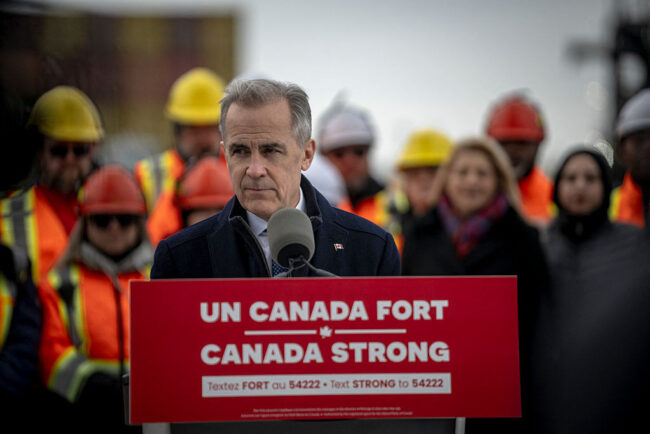
Canadian Prime Minister Mark Carney has declared a major shift in Canada’s economic approach, stating that the country’s traditional trade relationship with the U.S. is “over.” This decision comes in response to tariff threats from former U.S. President Donald Trump.
Carney’s Push for an East-West Economic Corridor
To counter Trump’s economic policies, Carney gathered Canada’s provincial leaders to remove internal trade barriers by July 1. These barriers are estimated to cost the Canadian economy 4% of its GDP annually. His goal is to facilitate the free movement of goods and services within Canada, reducing dependence on exports to the U.S.
Energy Policy Shift: Strengthening Domestic Networks
A key part of this strategy involves shifting Canada’s energy flow from a north-south axis (toward the U.S.) to an east-west model. This means prioritizing internal electricity transmission and focusing on renewable energy sources such as wind, solar, and nuclear power.
Conservative Leader Pierre Poilievre’s Alternative Plan
Canada’s opposition leader, Pierre Poilievre, has introduced his own plan: a Canada First National Energy Corridor. This proposal aims to establish a pre-approved route for pipelines, transmission lines, and rail networks to support national energy development.
Industry Experts Weigh In
Experts in Canada’s clean energy sector have long called for a more integrated energy strategy. Philippe Dunsky, a key advisor on Canada’s electricity policies, argues that better east-west energy integration would lower costs and accelerate the country’s transition to clean power.
The Future of Canada’s Trade and Energy Policies
With Trump’s economic stance driving urgency, Canada is at a crossroads. Whether the country fully embraces an internal economic model or continues to engage with the U.S. remains uncertain. However, Carney’s approach marks a significant pivot in Canadian economic policy.


COMMENTS