
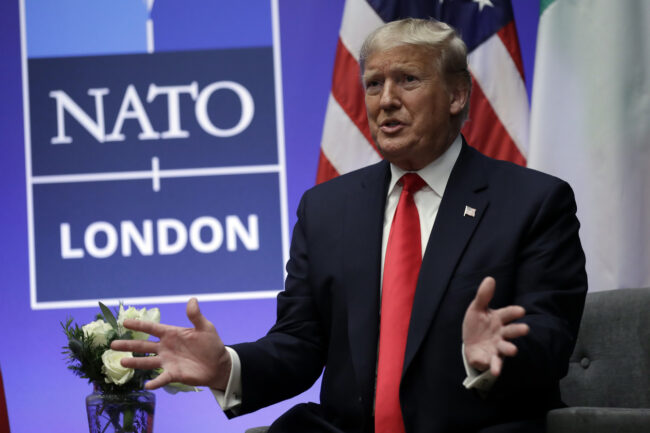
Former President Donald Trump’s recent comments inviting Russia to potentially invade NATO nations have ignited a mix of controversy and defense from his allies. While some Republicans downplay the remarks, others argue that they shouldn’t be taken literally.
Trump’s Remarks on NATO Spending Targets
Over the weekend, Trump made a statement suggesting he would encourage Russia to “do whatever the hell they want” against NATO allies that haven’t met their spending targets. His allies argue that the media is blowing the comments out of proportion and stress that Trump’s frustration with NATO allies is the driving force behind his words.
Strategic Unpredictability or Concerning Signals?
Republicans and foreign policy experts close to Trump suggest that his comments should be understood in the context of strategic unpredictability rather than an actual policy shift. They assert that Trump would be unlikely to abandon NATO allies in a crisis and that his comments are meant to emphasize the importance of NATO members meeting their spending commitments.
History of Trump’s Rhetorical Style
Trump’s allies point to a lengthy history of his confidants insisting that he doesn’t always mean what he says in public, highlighting a form of strategic unpredictability that they believe keeps the world on its toes. They argue that confusion over his position on NATO has prompted countries to increase their military spending to align with his expectations.
International Concerns and Criticism
Despite efforts to defend or add nuance to Trump’s comments, the international community and Trump critics remain concerned about the potential implications of his statements. Critics fear that a second Trump administration could weaken NATO and bring about the end of the transatlantic alliance.
Biden’s Response and Counterarguments
President Joe Biden criticized Trump’s NATO remarks, calling them “dumb, shameful, and un-American.” Trump’s allies, on the other hand, argue that he is emphasizing the need for NATO countries to fulfill their financial commitments and contribute their fair share to the alliance.
Uncertainty Over Trump’s Intentions
While Trump’s allies insist that he is not opposed to NATO fundamentally, there remains uncertainty over what actions he might take if he were to win a second term. Trump has consistently advocated for NATO members to meet the target of spending 2 percent of their GDP on defense, and his allies argue that his remarks are a way of emphasizing the importance of financial contributions.
Key Figures in Trump’s Foreign Policy Discussions
Trump frequently confers with an unofficial group of advisers on foreign policy issues, including names like Keith Kellogg, Richard Grenell, Fred Fleitz, John Ratcliffe, Kash Patel, and Mike Pompeo. However, the former president is known for veering off script based on his gut instincts during discussions.
Concerns About Future NATO Support
Trump’s comments come at a critical moment for U.S. support for Ukraine, with concerns about the potential ramifications of a second Trump term on NATO. Critics worry that Trump’s emphasis on financial contributions could lead to a weakening of the alliance, while his allies argue that he is pushing for a fair distribution of responsibilities among NATO members.
Conclusion: Balancing Act in Trump’s Foreign Policy Rhetoric
As Trump’s NATO comments continue to stir debate, the former president’s allies engage in a delicate balancing act, defending his remarks as strategic unpredictability while also emphasizing the importance of financial contributions from NATO members. The uncertainty over Trump’s intentions and the potential impact on international alliances adds a layer of complexity to the ongoing discussions.


COMMENTS