
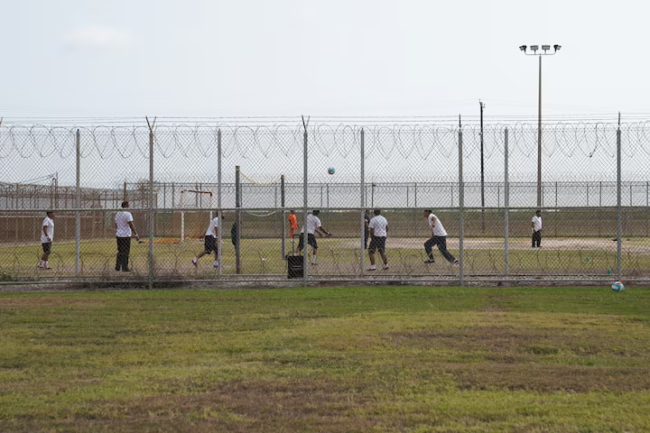
Detainees play outside during a media tour of the Port Isabel Detention Center (PIDC), hosted by U.S. Immigration and Customs Enforcement (ICE) Harlingen Enforcement and Removal Operations (ERO), in Los Fresnos, Texas, U.S., June 10, 2024. REUTERS/Veronica Gabriela Cardenas/Pool/File Photo
U.S. Judge Says Trump Administration Violated Court Order with Attempted Deportation to South Sudan
BOSTON/WASHINGTON, May 21 (Reuters) — A U.S. federal judge ruled Wednesday that the Trump administration violated a standing court order by attempting to deport a group of migrants to South Sudan without offering them a legal opportunity to contest the removal. The decision marks a fresh legal blow to the administration’s aggressive immigration enforcement practices.
Court Rebukes Unauthorized Transfer Effort
U.S. District Judge Brian Murphy, presiding in Boston, determined during a hearing that the attempted deportation contravened his April 18 preliminary injunction. That order barred U.S. immigration officials from sending deportees to third countries—other than their own—without affording them due process and the chance to raise safety concerns.
The migrants in question were reportedly being flown to South Sudan, a country plagued by violent crime and potential civil unrest. The U.S. State Department strongly advises against travel to South Sudan, and the United Nations has warned of risks of renewed conflict in the region.
Judge Murphy, a Biden appointee, acknowledged the potential for criminal penalties for Department of Homeland Security (DHS) officials who may have violated the injunction but deferred any such consideration for a later date.
Plane Landed, Location Withheld
During the hearing, Justice Department lawyer Elainis Perez confirmed that the plane carrying the eight deportees had landed, though she declined to specify where, citing “very serious operational and safety concerns.” The migrants remained in U.S. custody on the aircraft, a DHS official confirmed.
The deportees—originally from Cuba, Laos, Mexico, Myanmar, Vietnam, and South Sudan—had been convicted of serious crimes, including murder and armed robbery, according to DHS. However, advocates and legal experts stressed that even convicted individuals are entitled to constitutional protections, including the right to contest deportation to a third country.
Pattern of Court Confrontations
The incident adds to a series of recent legal confrontations between the Trump administration and the federal judiciary over immigration enforcement. Other notable cases include:
- Judge James Boasberg (Washington, D.C.): Ruled that the administration violated a separate order by transferring Venezuelan migrants to El Salvador without proper legal review under a rarely used 1798 wartime-era statute.
- Judge Paula Xinis (Greenbelt, Maryland): Found that DHS failed to explain its compliance with her order to facilitate the return of Kilmar Abrego Garcia, a Salvadoran man who was deported in violation of court instructions.
These cases reflect mounting judicial scrutiny over the administration’s efforts to deport migrants—especially to countries they are not nationals of—without proper legal channels or individualized risk assessments.
Administration Defends Policy
DHS spokesperson Tricia McLaughlin defended the removals at a press briefing Wednesday, saying the administration was targeting “barbaric, violent individuals illegally in the United States.”
“These are the monsters that the district judge is trying to protect,” McLaughlin said, without confirming the plane’s exact destination. However, the DHS press advisory had explicitly referred to the operation as a “Migrant Flight to South Sudan.”
The administration has argued that deporting certain migrants to third countries is necessary due to logistical difficulties and lack of repatriation agreements with their home nations. Immigrant rights groups argue such removals expose migrants to grave risks and violate U.S. legal obligations under the Fifth Amendment and international law.
Legal Implications
Judge Murphy’s ruling reinforces the constitutional requirement for due process in immigration enforcement. His injunction mandates that any migrants slated for removal to a third country must be informed and granted an opportunity to contest the deportation based on potential harm or persecution.
The case is expected to have wider implications for the administration’s evolving deportation strategy and sets up a potential constitutional test of the legal boundaries of third-country transfers.
For now, the eight men remain in limbo, reportedly sitting aboard a plane at an undisclosed location, as the courts and federal agencies navigate the legal and operational fallout of the administration’s contested actions.


COMMENTS