
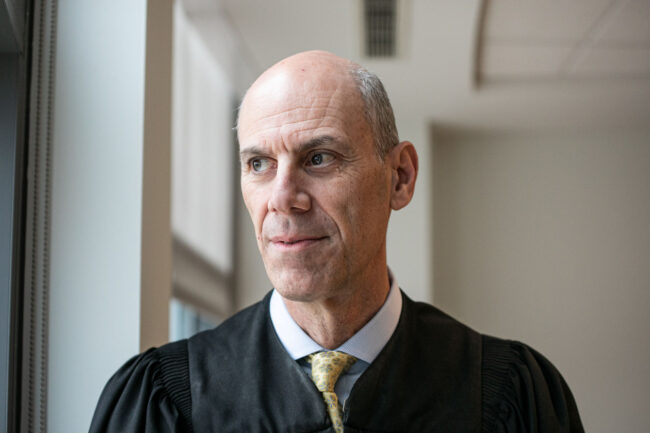
U.S. District Judge James Boasberg Criticizes Insufficient Government Response
U.S. District Judge James Boasberg has sharply criticized the Trump administration for providing a “woefully insufficient” response to his order regarding last weekend’s deportation flights of Venezuelan migrants to El Salvador. The judge’s remarks mark the beginning of proceedings that could lead to contempt charges against government officials.
Judge Demands Answers from Trump Administration
In a brief order, Boasberg directed Justice Department lawyers to explain by Tuesday why two planes carrying Venezuelan citizens from a Texas airport continued to their destination, despite his instructions to return them to the U.S. Additionally, he has demanded that the administration declare whether it intends to invoke the “state secrets privilege” to keep details of the operation confidential.
Trump officials argue that revealing details would endanger national security and strain diplomatic relations with multiple nations. However, Boasberg, who serves as the chief judge of the Washington, D.C. district court, has grown increasingly frustrated with the administration’s refusal to disclose details about the controversial deportation policy.
Trump Responds With Harsh Criticism
Former President Donald Trump has fiercely criticized Boasberg’s actions, labeling him a “Radical Left Lunatic” and calling for his impeachment. In a post on Truth Social, Trump accused the judge of attempting to overstep his authority, writing:
“He is a local, unknown Judge, a Grandstander, looking for publicity, and it cannot be for any other reason, because his ‘Rulings’ are so ridiculous, and inept. SAVE AMERICA!”
Legal Battle Over Alien Enemies Act
The Trump administration deported over 200 Venezuelan nationals on Saturday, citing the Alien Enemies Act, an 18th-century law historically invoked only three times, most recently in World War II. The administration claims these individuals were members of the Tren de Aragua, a criminal gang allegedly tied to the Venezuelan government.
Boasberg initially blocked the removal of a small group of migrants who had filed a lawsuit, demanding a hearing to assess whether a broader deportation block should be enacted. However, before the judge could make a final ruling, two deportation planes had already taken off. Hours later, a highly orchestrated video surfaced, showing the shackling and processing of the Venezuelan deportees in El Salvador.
Potential Contempt Charges Loom
Boasberg is now investigating whether the Trump administration openly defied his directive. While government attorneys argue that his ruling lacked formal weight since it was issued orally from the bench, the judge is questioning the timeline of events, particularly when the flights departed U.S. airspace.
If Boasberg determines that the administration deliberately ignored his directive, he could hold officials in contempt of court. Potential penalties range from fines to imprisonment, though judges often opt for symbolic reprimands in cases involving executive authority.
This legal battle underscores the broader tensions between judicial oversight and executive power, particularly in immigration enforcement under Trump’s presidency.


COMMENTS