
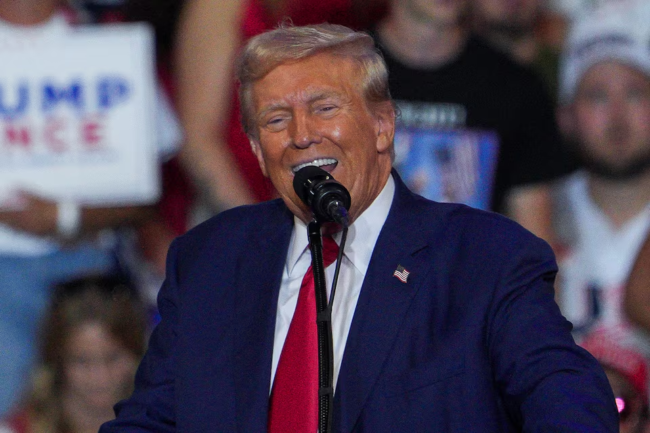
Donald Trump, Wilkes-Barre, Pennsylvania, August 17, 2024. REUTERS/Jeenah Moon
Judge Delays Donald Trump’s Sentencing in Hush Money Case Until After Election
Sentencing Postponed to Avoid Perception of Political Bias
On Friday, a New York judge postponed the sentencing of former U.S. President Donald Trump in his criminal case involving hush money payments until after the November 5 election. Originally scheduled for September 18, Trump’s sentencing was delayed by Justice Juan Merchan, who stated that the decision was made to avoid the “unwarranted perception” of political motivation. Merchan emphasized that the court must remain “fair, impartial, and apolitical.”
Trump’s legal team had requested the delay in August, arguing that scheduling the sentencing before the election could lead to claims of election interference. Manhattan District Attorney Alvin Bragg, a Democrat, had brought the charges, while Trump, the Republican nominee for president, denied any wrongdoing and condemned the case as politically driven.
New Sentencing Date Set for November 26
Justice Merchan set the new sentencing date for November 26, pending a possible dismissal of the case. He made it clear that the delay was to avoid any suggestion that the court proceedings could influence the presidential election, in which Trump is a candidate. In a statement on Truth Social, Trump expressed appreciation for Merchan’s decision but reiterated that his legal team intends to appeal the verdict.
Background of the Case
Trump was convicted on May 30 of 34 felony counts of falsifying business records. The charges stem from a $130,000 payment made by Trump’s former lawyer to adult film actress Stormy Daniels in exchange for her silence regarding an alleged sexual encounter before the 2016 presidential election. Trump denies the affair and has vowed to appeal the verdict after his sentencing.
The payment was allegedly disguised as legal expenses to conceal its true nature. While falsifying business records can carry a prison sentence of up to four years, non-incarceration punishments such as fines or probation are more common for such offenses.
Pending Supreme Court Ruling on Presidential Immunity
Merchan also addressed Trump’s pending motion to overturn the conviction, which cites a landmark U.S. Supreme Court ruling on presidential immunity. This decision, set to be addressed on November 12, will determine whether the conviction could be overturned based on the argument that presidents cannot be prosecuted for official acts. However, the prosecution has argued that Trump’s case pertains to personal conduct, unrelated to his official duties as president.
Potential Impact of Election Outcome
If Trump were to win the presidency in 2024, he could theoretically direct the U.S. Department of Justice to drop federal charges related to election interference. However, Trump would have no authority over state-level cases, including the hush money case in New York or an election interference case in Georgia.


COMMENTS